
Choosing Books That Help Children Understand Disability and Difference
Children notice differences. They notice when someone uses a wheelchair, communicates without speaking, wears a hearing aid, moves differently, or needs support with something that comes easily to them. They may have questions about why a classmate does something differently or why one child receives an accommodation that another does not.
Those questions offer an opportunity to help children understand disability without treating it as something frightening, unusual, or deserving of pity.
Books give children a way to encounter people whose bodies, senses, communication, learning, and experiences differ from their own. A thoughtful story does more than explain a disability. It introduces a character with interests, relationships, frustrations, humor, strengths, and a life that extends well beyond a diagnosis.
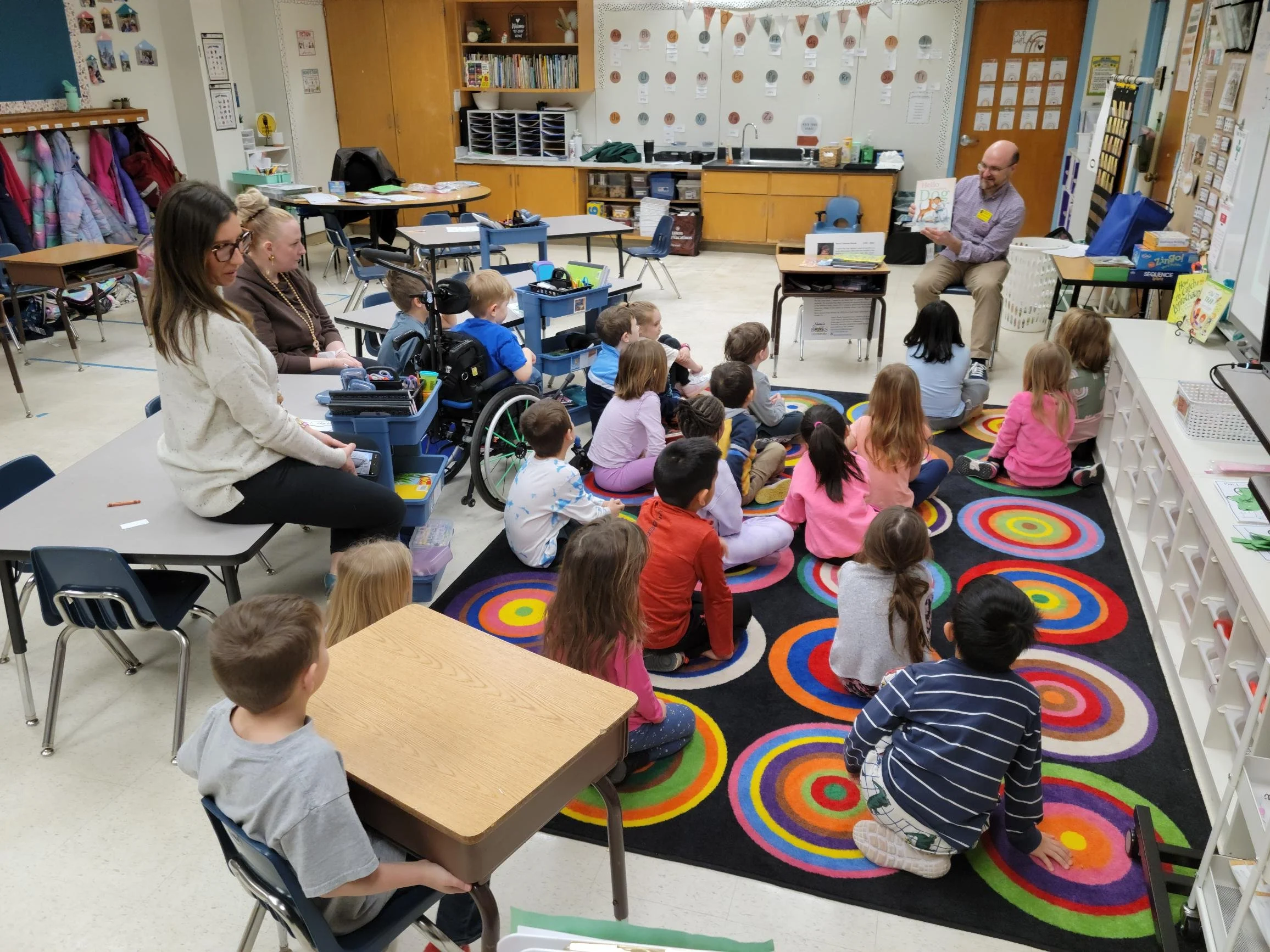
The books children encounter also shape what they come to expect. Stories may reinforce stereotypes, or they may show disabled children participating fully in friendships, families, classrooms, adventures, and communities. Strong representation gives disabled children opportunities to see themselves in stories while giving other children a broader understanding of the people around them.
At Nana’s Books Foundation, we believe the right book opens the door to questions, understanding, and conversations about what inclusion and belonging look like in everyday life.
Children Notice Differences
Children notice how people move, communicate, learn, play, and participate in the world around them. A wheelchair, hearing aid, communication device, service animal, or classroom accommodation may naturally prompt a question. Children may also notice differences that are less visible, including the way another child communicates, responds to noise, interacts with others, or needs support.
A question such as “Why does she use a wheelchair?” or “Why doesn’t he talk?” may make an adult uncomfortable, especially when the person being discussed is nearby. But noticing a difference is not the same as judging it. A calm, matter-of-fact response helps children learn that disability is something they may talk about respectfully.
Adults do not need to know the details of another person’s disability to respond. In fact, guessing about someone’s diagnosis or personal circumstances may reinforce assumptions. A simple answer often gives a child enough information while respecting the other person’s privacy.
Simple Ways to Respond
“Why does she use a wheelchair?”
“Her wheelchair helps her get where she wants to go.”
“Why doesn’t he talk?”
“People communicate in different ways. He may use gestures, pictures, a device, or other ways to tell people what he wants to say.”
“Why does she get to wear headphones in class?”
“The headphones may help her feel comfortable and focus. Different people need different things to learn and participate.”
Children also learn from the language adults use. Describing someone as “suffering from” a disability, assuming they need help, or treating ordinary activities as extraordinary may unintentionally teach children to view disability through pity or inspiration. Neutral, respectful language keeps the focus on the person and their experience.
When a child wants to know more, it is also okay to say, “I don’t know.” Adults do not need to explain another person’s body, diagnosis, or abilities. Leaving some questions unanswered respects privacy while showing children that curiosity and respect can exist together.
What a Good Disability Story Does
Books about disability do more than introduce children to a diagnosis, mobility device, or different way of communicating. The strongest stories introduce them to people. A disabled character has friendships, interests, preferences, problems to solve, mistakes to make, and adventures to experience. Disability is part of the character’s life without necessarily becoming the entire story.
Representation matters in the details. A story may include accessibility, accommodations, or assistance without portraying the disabled character as helpless. It may show a character asking for what they need, making decisions, solving problems, helping someone else, or simply participating in everyday life.
Pay attention, too, to where the story places the problem. Sometimes a person’s disability creates real challenges. At other times, the obstacle comes from an inaccessible environment, an assumption someone makes, or being excluded from an activity. Books help children recognize that changing the environment or removing a barrier may change what is possible.
Stories also shape how children understand relationships. Disabled characters should not exist only to inspire, teach, or change the nondisabled characters around them. Look for friendships and family relationships in which people enjoy one another, disagree, contribute, receive support, and matter to each other.
A good disability story gives children a person to know, not a lesson about someone who is different.
Choosing a Book About Disability
A book may include a disabled character and still send messages you would not choose to reinforce. Before sharing a story with a child, look beyond the presence of disability and consider how the character is portrayed, whose perspective shapes the story, and what the story suggests about disability and belonging.
Look for a whole person.
A disabled character should have interests, relationships, emotions, strengths, and flaws that extend beyond disability. Ask whether the reader gets to know the character as a person or primarily learns about a diagnosis or difference.
Notice who has agency.
Does the disabled character make choices, express preferences, solve problems, and affect what happens in the story? Strong representation allows disabled characters to participate in their own lives rather than simply being helped, protected, or spoken for by others.
Consider whose perspective is represented.
Books informed by disabled authors, illustrators, or people with relevant lived experience may offer perspectives that are often missing from stories told only from the outside. Lived experience is not the only measure of a book, but it is worth considering.
____________________________________
Watch for pity and inspiration.
Be cautious when disability is presented mainly as tragic or when a disabled character is celebrated simply for doing ordinary things. A story does not need to minimize real challenges to portray a disabled person with dignity.
Look at where the barriers are.
Sometimes the challenge is connected to a person’s disability. Sometimes it is a staircase without a ramp, information offered in only one format, a noisy environment, or someone else’s assumptions. Good stories may help children see the difference.
Pay attention to relationships and belonging.
Look for disabled characters who participate in friendships, families, classrooms, and communities in meaningful ways. Inclusion is more than being present in the scene; the character should have opportunities to contribute, connect, disagree, play, and belong.
The goal is not to find a book that makes disability disappear. It is to find stories that let disabled people be fully present.
Books to Explore
Disability appears in children’s literature in many different ways. Some stories center everyday life, friendship, communication, or adventure. Others answer questions directly or introduce children to the history of disability rights. Together, these books offer different ways to explore disability, communication, accessibility, identity, and belonging with children.
_________________________________________
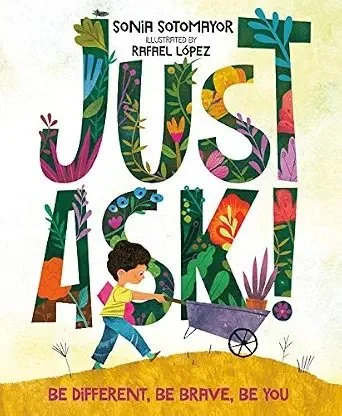
Just Ask!
By Sonia Sotomayor | Illustrated by Rafael López
May be helpful for: Introducing younger children to disability and different ways people experience the world.
Children with a range of disabilities and health conditions work together to create a garden while asking and answering questions about their differences. The book encourages curiosity and conversation rather than avoiding questions about disability. Just Ask! received the American Library Association’s Schneider Family Book Award, which recognizes books expressing the disability experience for children and teens.
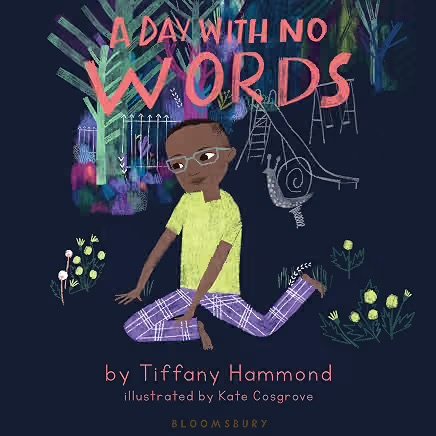
A Day With No Words
By Tiffany Hammond | Illustrated by Kate Cosgrove
May be helpful for: Helping children understand nonspeaking communication, autism, and AAC.
Aidan is an autistic child who communicates using a tablet rather than spoken words. The story follows an ordinary day with his mother while showing that communication also happens through pictures, gestures, facial expressions, written words, and other forms. Rather than treating the absence of speech as an absence of understanding, the story places readers inside the experiences of an autistic family.
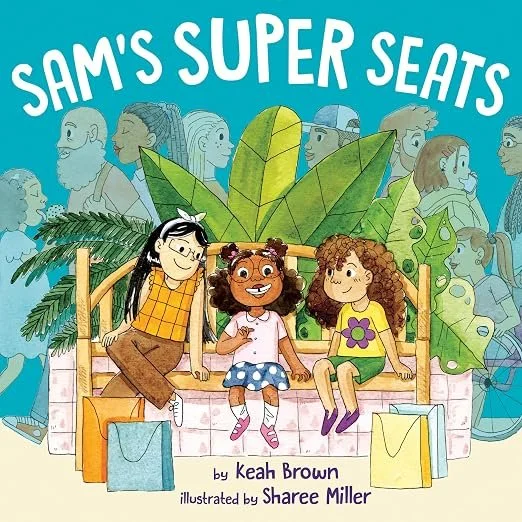
Sam’s Super Seats
By Keah Brown | Illustrated by Sharee Miller
May be helpful for: Talking about cerebral palsy, accessibility, rest, and self-advocacy.
Sam, a girl with cerebral palsy, goes back-to-school shopping with her best friends. When her legs become tired, comfortable places to sit help her rest and continue enjoying the day. The story treats rest and accessibility as part of Sam’s everyday experience while keeping friendship, fun, imagination, and self-confidence at its center. Author Keah Brown, who has cerebral palsy, is also the creator of the #DisabledAndCute movement.
_________________________________________
Not So Different: What You Really Want to Ask About Having a Disability
By Shane Burcaw | Photographs by Matt Carr
May be helpful for: Children who have direct questions about physical disability and wheelchair use.
Writer Shane Burcaw answers questions children commonly ask about his life with spinal muscular atrophy, including questions about his wheelchair, daily assistance, friendships, and activities. Told in Burcaw’s own voice and illustrated with photographs from his life, the book gives children straightforward information without asking another disabled person to answer personal questions for them.
_________________________________________
We Want to Go to School!: The Fight for Disability Rights
By Maryann Cocca-Leffler & Janine Leffler | Illustrated by Maryann Cocca-Leffler
May be helpful for: Introducing children to disability rights, educational access, and advocacy.
The book tells the true story behind the 1971 Mills v. Board of Education of the District of Columbia case, brought by children with disabilities and their families after disabled children were excluded from public education. The story is told through the perspective of coauthor Janine Leffler, whose access to school was shaped by the rights established through cases like Mills. It helps children see that disability inclusion involves not only individual attitudes, but also access, rights, and the removal of barriers.
_________________________________________
Helping Children Practice Inclusion
Books give children a place to learn about disability, ask questions, and encounter experiences different from their own. The next step is helping them carry that understanding into everyday life. Inclusion grows through ordinary interactions: who gets invited to play, whose ideas are heard, how people communicate, and whether everyone has a meaningful way to participate.
Ask instead of assuming.
If someone appears to need help, encourage children to ask before stepping in. A person may want assistance, prefer to do something independently, or have another way of accomplishing the task.
Include without making someone the center of attention.
Inviting a child to join a game, conversation, or activity should not require turning their disability into a lesson for everyone else. Inclusion often looks wonderfully ordinary.
Make room for different ways to communicate.
Speaking is only one way people communicate. Gestures, sign language, communication devices, facial expressions, pictures, and written words all carry meaning. Children learn inclusion when they give others the time and attention to communicate in their own ways.
Notice barriers and imagine alternatives.
A child may begin to recognize that stairs, noise, crowded spaces, rules, or the way an activity is designed affect who gets to participate. Ask what could change so more people are included.
Children also notice how adults respond to disability. When adults speak directly to disabled people, respect personal space and mobility equipment, listen without rushing, and avoid making assumptions about what someone needs or understands, they model the same respect they hope children will show.
Recognizing differences, respecting each person, and making room for everyone to participate help children understand what belonging looks like in everyday life.
Learn More About Disability and Inclusion
These resources offer additional guidance for choosing thoughtful disability representation, using respectful language, and making shared reading more accessible to children with different needs and abilities.
American Library Association: Schneider Family Book Award
The Schneider Family Book Award recognizes books that portray the disability experience for children and teens. Its selection criteria offer a useful framework for evaluating representation, including whether disability is presented as part of a full life, characters avoid stereotypes and pity, disabled people play meaningful roles in the story, and disability information is accurate.
National Center on Disability and Journalism: Disability Language Style Guide
A practical guide to respectful and accurate language about disability. It explains terminology, common stereotypes, and differences in language preferences, including person-first and identity-first language, while emphasizing that preferences vary among individuals and disability communities.
HealthyChildren.org: Sharing Books With Children With Special Health and Development Needs
Guidance from the American Academy of Pediatrics for adapting shared reading to children with different communication, developmental, hearing, vision, and learning needs. The suggestions help families make reading together more accessible and engaging for the child in front of them.
Continue Exploring
Books offer children many ways to learn about disability and difference, from stories about friendship and everyday life to first-person experiences and the history of disability rights.
Explore more books and resources selected to help children, families, and educators continue these conversations with curiosity, respect, and understanding.
EXPLORE BOOKS & RESOURCES →