
Helping Children Understand Alzheimer’s and Dementia Through Books
A grandparent begins repeating the same question. Someone who always remembered a child’s name suddenly doesn’t. A familiar person becomes confused, frustrated, or needs more help than before.
Children often notice these changes before they understand what is causing them. They may wonder why someone they love is acting differently, worry that they did something wrong, or have questions they aren’t sure how to ask. Children and teens may also feel sad, angry, embarrassed, or afraid as a relationship begins to change.
Talking openly about Alzheimer’s disease or another form of dementia gives children a way to make sense of what they are seeing. The explanation will look different for each child, based on their age, maturity, relationship with the person who has dementia, and the changes they have already experienced. Clear, honest language helps children understand what is happening without giving them more information than they are ready to process.
Books offer a natural place to begin. A story introduces memory loss and other changes through characters and situations a child can explore at their own pace. Reading together also creates opportunities to stop, answer a question, talk about a feeling, or connect something in the story with what is happening in the child’s own family.
At Nana’s Books Foundation, we believe the right book helps a child understand something that may otherwise be difficult to explain.
Why Alzheimer’s and Dementia Can Be Confusing for Children
Dementia affects much more than memory. As dementia progresses, a child may notice changes in the way someone communicates, behaves, thinks, or manages familiar activities. A grandparent may repeat a story, struggle to find a word, become confused about where they are, or call a child by someone else’s name.
Those changes can feel personal to a child. A forgotten name might sound like Grandpa doesn’t know me anymore. Irritability might become Grandma is mad at me. A young child may wonder if something they did caused the changes. The National Institute on Aging recommends answering children’s questions simply and honestly and reassuring them that no one caused the disease.
Start with what the child has already noticed. A simple observation such as, “You may have noticed that Grandma asks the same question several times,” gives the child something familiar to connect with the explanation. For a young child, that might lead to, “Grandma has an illness that makes it harder for her brain to remember things.” Older children and teens may want to know more about dementia, how the brain is affected, and what changes they might see in the future.
Children don’t need to understand everything about dementia in one conversation. Their questions and understanding change as they grow and as the person’s dementia changes. Keeping the conversation open gives them a place to return with new questions, worries, or feelings.
Start With What the Child Has Noticed
Children often have pieces of the story before anyone explains dementia to them. They may have heard the same question several times, watched a grandparent struggle with a familiar task, or noticed that visits feel different. Beginning with something the child already recognizes gives the conversation a concrete starting point. Alzheimer’s Society recommends acknowledging changes that may seem strange and asking children what they already understand about dementia.
The conversation might begin with, “You’ve probably noticed that Grandpa has trouble remembering some things lately.” Give the child time to respond before adding more. Their answer may tell you what they have noticed, what they misunderstand, and what is worrying them.
Words to begin the conversation
“You’ve probably noticed that Grandpa has trouble remembering some things lately.”
“Grandma has an illness called Alzheimer’s that makes it harder for her brain to remember things.”
For a younger child, a simple explanation may be enough. The National Institute on Aging recommends simple, honest answers and specifically encourages adults to reassure young children that they didn’t cause the disease.
Older children and teens may want more detail. Ask what they already know, answer their questions clearly, and check their understanding of unfamiliar terms. Their concerns may center on changes in the relationship as much as the disease itself.
A child also needs room to say, “I’m angry,” “I don’t like visiting anymore,” or “It’s embarrassing when Grandma does that.” Listening gives you information that an explanation alone won’t. It also opens the door for future conversations as the child’s questions and the person’s dementia change.
Questions Children May Be Afraid to Ask
Children don’t always say what is worrying them. A change in someone’s memory or behavior may leave them wondering about things they haven’t found the words to ask. Simple, honest answers help correct misunderstandings and give children permission to keep asking questions. The Alzheimer’s Association identifies concerns about causing dementia, catching it, developing it themselves, and no longer being recognized among the questions children may have.
Did I cause this?
No. Nothing a child said or did caused the person’s dementia. Young children especially may connect events in ways adults don’t expect, so it helps to say this clearly: “You didn’t cause Grandma’s illness.”
Why doesn’t Grandma or Grandpa remember me?
Dementia changes how the brain works and may make it difficult for someone to remember names, faces, relationships, or recent experiences. A forgotten name doesn’t tell a child how much they are loved. You might say, “Grandpa is having trouble remembering your name today. You are still someone very special to him.”
Can I catch it?
No. Alzheimer’s disease and other forms of dementia aren’t contagious. Children can spend time with, hug, talk with, and play with someone who has dementia without catching the disease.
Will they get better?
Alzheimer’s disease gets worse over time. There isn’t currently a cure, although treatment may help with symptoms or slow the disease for some people. For a young child, the answer may be much simpler: “Grandma’s illness isn’t going to go away, and we’ll keep finding ways to spend time with her and help her feel loved.”
A child may also wonder, Will this happen to you? Will it happen to me? Those questions deserve an honest answer without giving a child more medical detail than they need. Family history affects the risk of developing Alzheimer’s, but having a relative with the disease doesn’t mean another family member will develop it. If a child continues to worry, return to what matters right now and invite them to keep asking questions.
How Books Help Start the Conversation
Talking about dementia with a child may feel difficult because adults are often searching for the right words themselves. A story gives everyone something concrete to talk about. Instead of beginning with an explanation of the disease, an adult and child meet a character, notice what is happening, and see how that character responds.
Books also give children a little distance from their own experience. A child who isn’t ready to talk about Grandpa may be willing to talk about the grandfather in a story. Questions such as “Why do you think she felt that way?” or “Does anything in this story remind you of Grandma?” create openings without forcing the conversation.
Reading together also lets the child set the pace. You can stop when they have a question, explain an unfamiliar idea, or leave the conversation and return to it another day. The same book may take on new meaning as the child grows or as dementia changes the relationship.
The most helpful books do more than explain memory loss. They show children that the person they love is still a person with interests, feelings, history, and relationships. They also offer ways to stay connected, even when familiar conversations or activities become harder.
Choosing the Right Book for Your Child
A book that works well for one child may not be the right choice for another. Age matters, but so do the child’s experiences, questions, and relationship with the person who has dementia. Before choosing a book, think about what the child is trying to understand right now.
___________________________________________________
Consider the child’s age and understanding.
Look for language and explanations that match what the child is ready to understand. Younger children may need a simple story built around familiar experiences, while older children and teens may want more information about dementia and the changes ahead.
Look for a story that reflects what the child is experiencing.
A child whose grandparent has recently begun forgetting names may need a different story from a child whose grandparent has moved into memory care. Familiar situations give children a way to connect the story with their own lives.
Pay attention to how the person with dementia is portrayed.
Look for books that show the whole person, not only the disease. Interests, personality, family history, humor, and affection still belong in the story.
Make room for difficult feelings.
Children may feel sad, confused, frustrated, embarrassed, or angry. A helpful story acknowledges those feelings without telling children how they are supposed to feel.
Look for ways to stay connected.
Stories may also give children ideas for spending time together as the relationship changes. Sharing music, looking at photographs, drawing, gardening, or spending quiet time together gives children concrete ways to maintain a relationship as dementia changes it.
The right book meets a child where they are and gives the family a place to begin talking.
Books to Explore
Children experience dementia differently, and the book that helps one child may not answer another child’s questions. Nana’s Books Foundation has distributed children’s books that approach Alzheimer’s and dementia through different stories, relationships, and experiences. These five titles offer several places to begin.
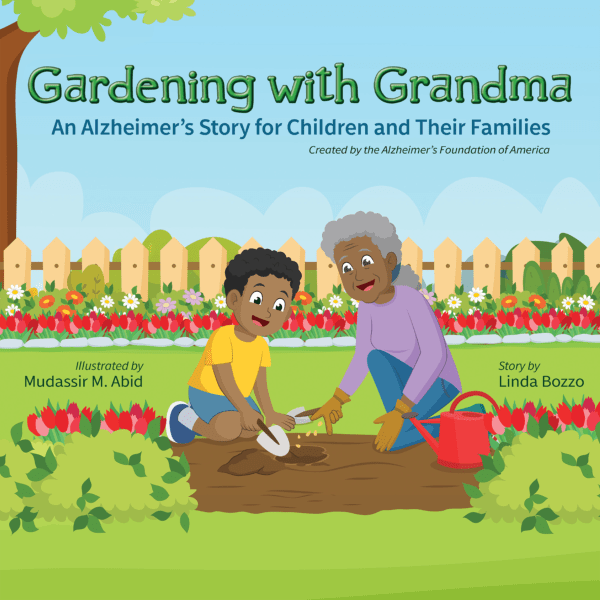
Gardening with Grandma
Story by Linda Bozzo | Illustrated by Mudassir M. Abid
May be helpful for: A child beginning to notice memory changes in a grandparent.
Luke loves gardening with his grandmother, but he begins noticing that she forgets familiar things. The story follows their relationship as her Alzheimer’s progresses and she eventually moves to a home where she receives more help. Gardening remains something they share. The book introduces memory loss while showing that familiar activities may continue to provide connection.
___________________________________________________
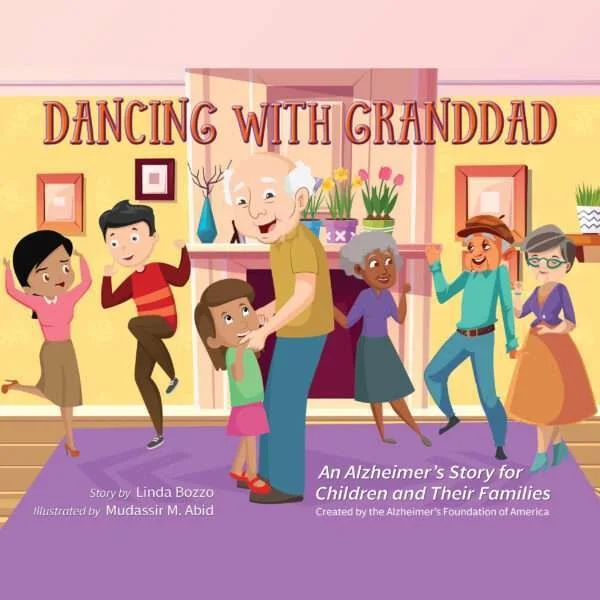
Dancing with Granddad
By Linda Bozzo | Illustrated by Mudassir M. Abid
May be helpful for: A young child seeing changes in a grandparent’s behavior or preparing for a move to a new home.
Seven-year-old Nia learns that her granddad has Alzheimer’s as she experiences changes that include repeated stories, confusion, agitation, and wandering. When he needs to move somewhere safer, the story helps explain why while keeping Nia’s relationship with her granddad at its center. AFA created the book for children ages 5–8 as a tool for beginning conversations about Alzheimer’s.
___________________________________________________
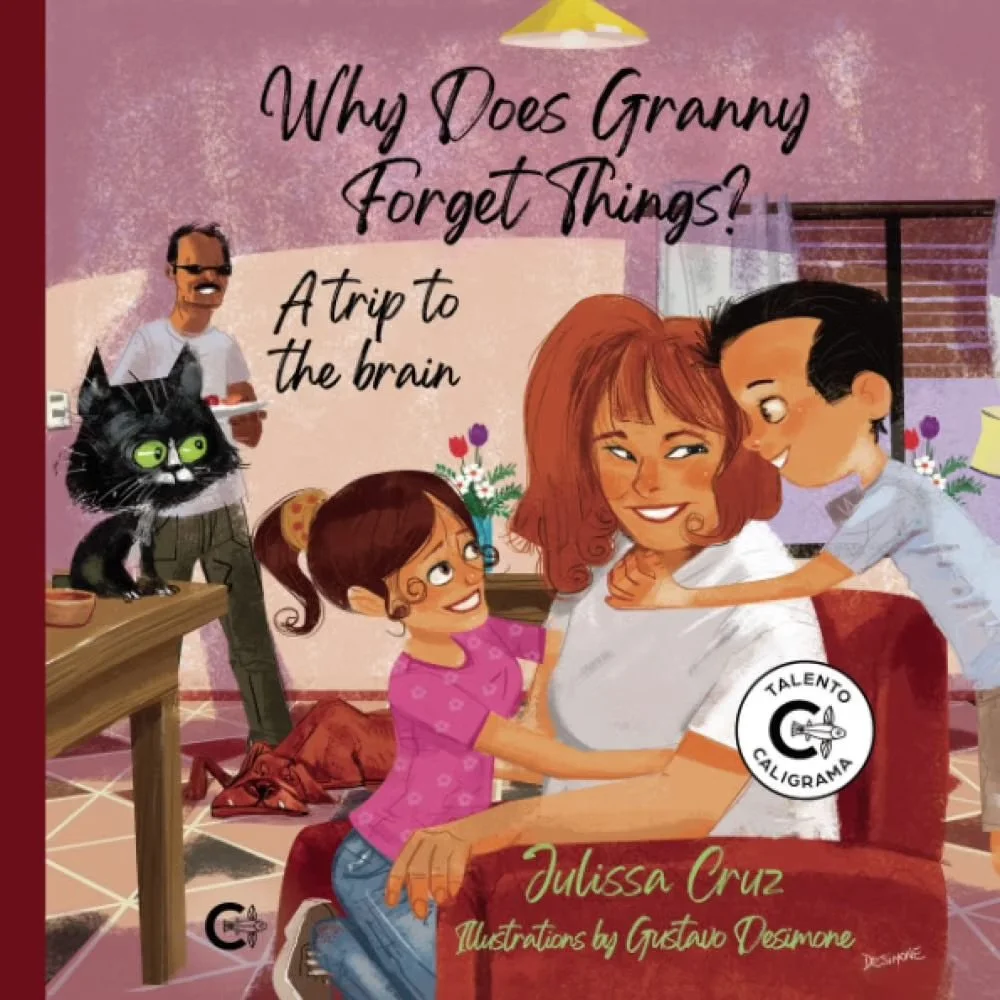
Why Does Granny Forget Things? A Trip to the Brain!
By Julissa Cruz | Illustrated by Gustavo Desimone
May be helpful for: A child asking why dementia changes someone’s memory.
Two children take an imaginative trip inside their grandmother’s brain, where they encounter the hippocampus and neurons as they try to understand her cognitive changes. The story helps children understand some of the brain changes associated with dementia and includes guidance for adults talking with children and teens about the disease.
___________________________________________________
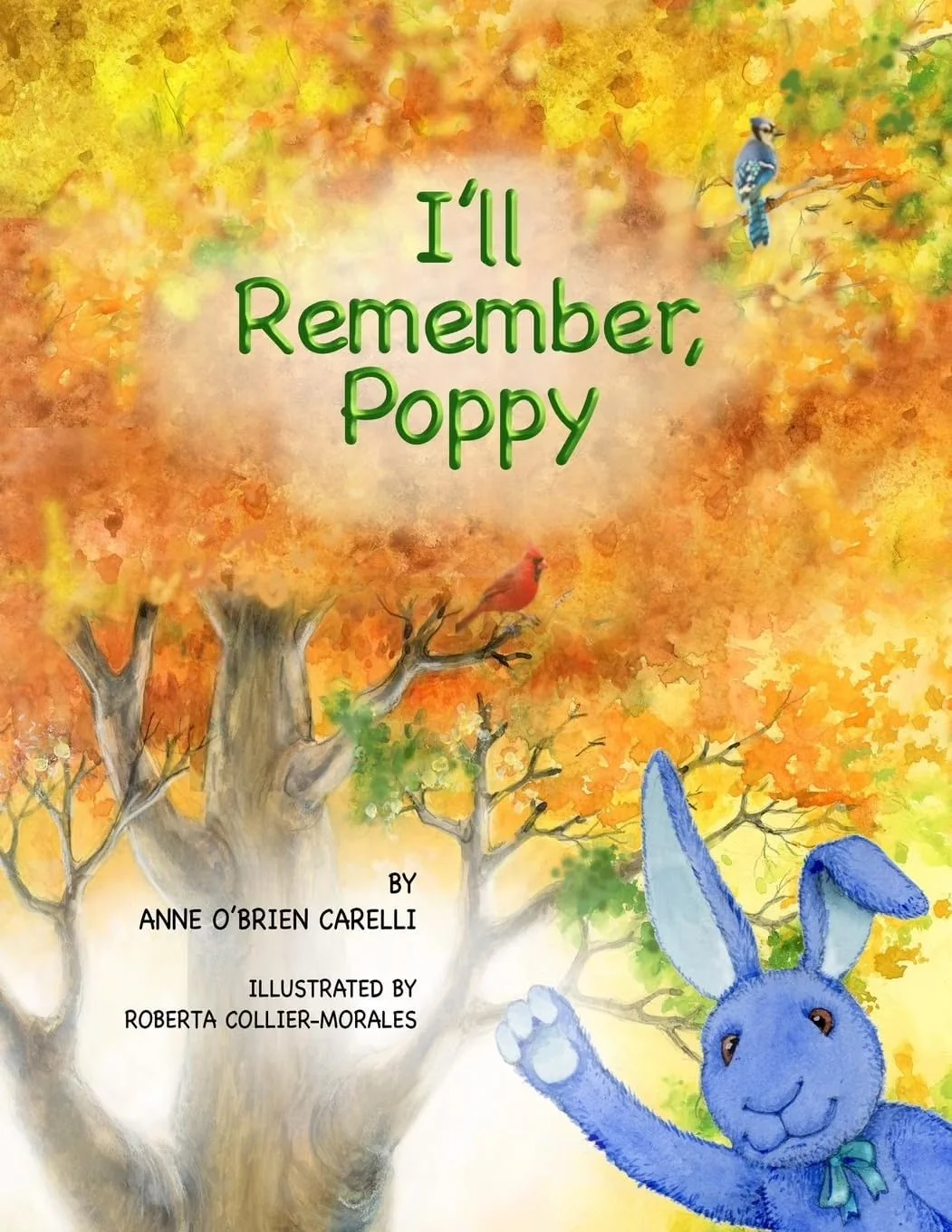
I’ll Remember, Poppy
By Anne O’Brien Carelli
May be helpful for: A child adjusting to changes in a relationship with a grandparent who has dementia.
Told through a child’s eyes, the story follows a compassionate relationship with Poppy, a grandfather who has dementia. An author’s note provides additional information about dementia for families and caregivers.
___________________________________________________
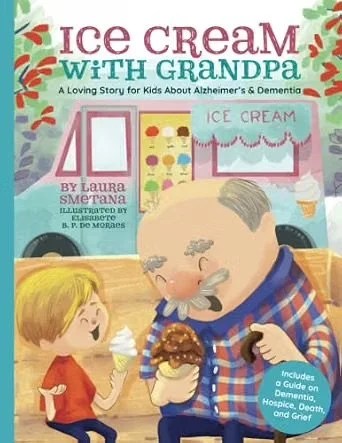
Ice Cream with Grandpa: A Loving Story for Kids About Alzheimer’s & Dementia
By Laura Smetana | Illustrated by Elisabete B. P. de Moraes
May be helpful for: A child experiencing later changes in dementia, including memory care, hospice, or loss.
A grandson’s shared love of ice cream with his grandpa remains a thread through major changes in their relationship. The story follows Grandpa’s move from assisted living to memory care and eventually hospice, while showing ways their connection continues. The book also includes a guide for adults about talking with children about dementia, hospice, death, and grief.
Helping Children Stay Connected
Dementia changes relationships, but children and the people they love may still share meaningful time together. As conversation and familiar activities become more difficult, simpler ways of connecting may work better.
Think about what the person has always enjoyed and what feels comfortable now. A child might:
→ Look through family photographs together
→ Listen to familiar music or sing a favorite song
→ Draw, color, garden, or work on a simple craft
→ Take a walk or spend time outside
→ Read a familiar story aloud
→ Share a snack or another familiar routine
→ Sit together and enjoy the moment without expecting conversation
Children may need help understanding that the activity doesn’t have to go the way it once did. Grandpa may tell the same story again. Grandma may forget what they did together yesterday. The activity may change, but spending time together still gives the child and the person they love a way to connect.
Connection doesn’t depend on remembering everything. A familiar voice, a favorite song, or time spent together may still matter.
Learn More About Alzheimer’s and Dementia
National Institute on Aging: Helping Family and Friends Understand Alzheimer’s Disease
Guidance for helping children understand Alzheimer’s disease, answering their questions honestly, and finding ways to spend time together.
Alzheimer’s Association: Talking to Kids About Alzheimer’s and Dementia
Information and support for families, including resources specifically for talking with children and teens about dementia.
Alzheimer’s Association: Alzheimer’s and Dementia Resources for Children
Books, videos, activities, and other resources designed to help children understand Alzheimer’s and dementia.
Continue Exploring
Stories give children a place to begin understanding experiences that may be difficult to explain.
Explore more books and resources from Nana’s Books Foundation about Alzheimer’s and dementia, disabilities and differences, and caregiving and family support.
EXPLORE BOOKS & RESOURCES →